Georgia is widely considered the birthplace of wine, with archaeological evidence of winemaking in the region dating back roughly 8,000 years. Nearly all of that story happens in one place: Kakheti, the rolling valley in eastern Georgia that produces around 70% of the country's wine. If Tbilisi is the introduction to Georgia, Kakheti is where the country's oldest tradition actually lives. Here's what to know before you go.
Where Is Kakheti and How Do You Get There?
Kakheti sits about 1.5–2 hours from Tbilisi by road. The two main bases are:
Telavi — the regional capital, more infrastructure, better transport connections, and closer to most of the vineyards and monasteries. A practical choice if you want a home base with restaurants and wine bars.
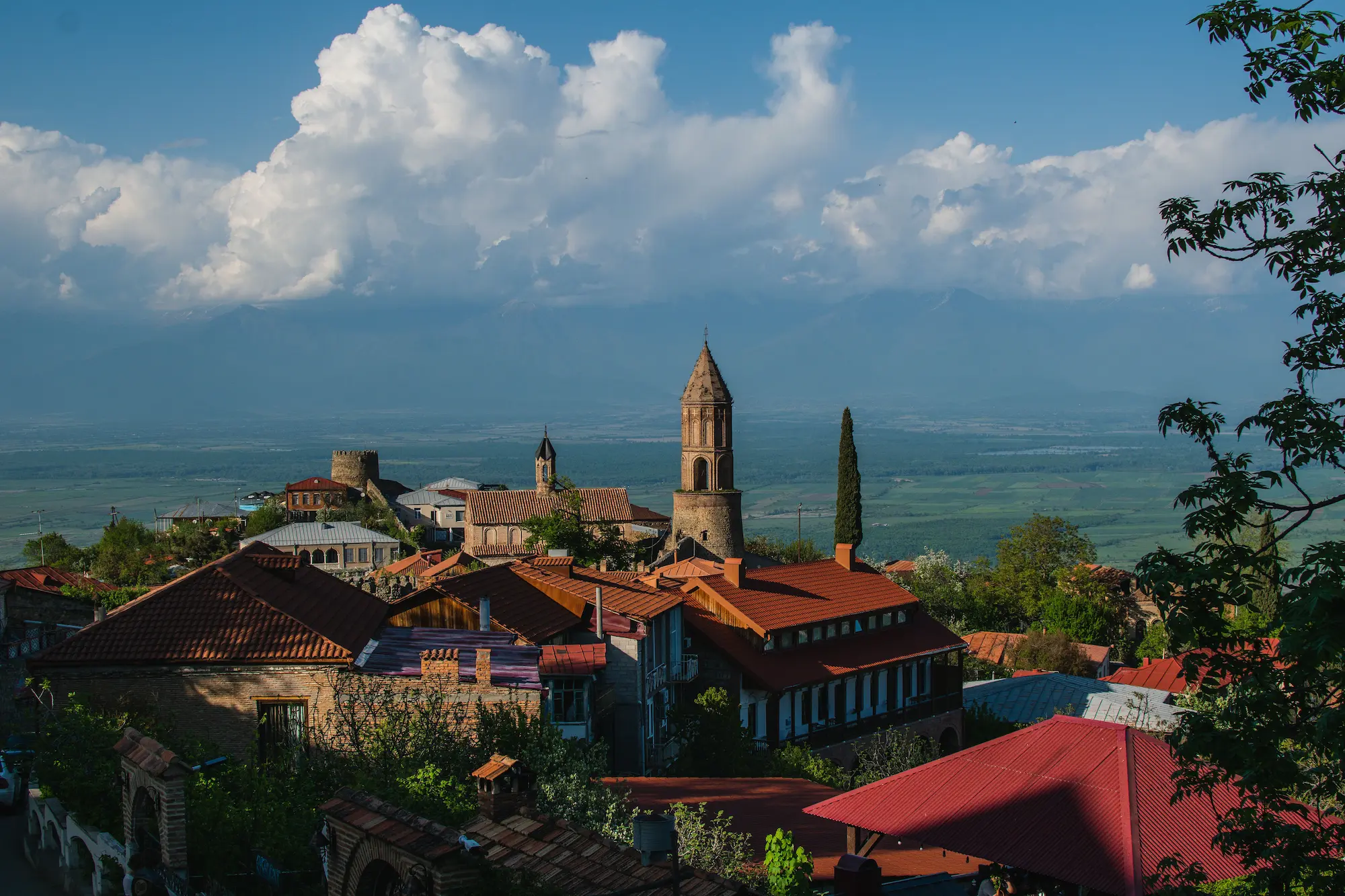
Sighnaghi — a smaller, hilltop town known as the "City of Love" (its marriage registry runs 24 hours a day), with cobblestone streets, fortress walls, and sweeping views over the Alazani Valley. More photogenic, but you'll need to travel a bit further to reach the closest wineries.
The Two Roads to Kakheti
Gombori Pass route — The shorter, more scenic option, taking under 2 hours from Tbilisi to Telavi and climbing to around 1,600–1,650 m at its highest point. The road winds through subalpine fields, hills, and forest, with sweeping Caucasus views once you cross the pass — especially striking in autumn. It's fully paved but genuinely mountainous, with sharp turns throughout. Taxis and private cars typically favor this route; marshrutka vans generally avoid it, since it's harder to navigate in a larger vehicle.
Kakheti Highway (via Sagarejo) — The longer but flatter, more stable route, taking around 3 hours to Telavi through dry lowland terrain with a gentle high point of under 900 m. This is the road most marshrutkas and larger vehicles use, and it's also the standard route toward Sighnaghi, passing a few worthwhile stops of its own, like Ujarma Fortress.
Practical takeaway: if you're driving yourself, the Gombori Pass is the more rewarding choice. If you're taking a marshrutka or joining a group tour, you'll likely travel via Sagarejo regardless. Some travelers combine both — entering Kakheti one way and returning the other — to see more of the region without retracing the same road twice.
What Makes Georgian Wine Different: The Qvevri Method
The defining feature of Kakhetian winemaking is the qvevri — a large, egg-shaped clay vessel buried underground, where wine ferments and ages in contact with grape skins, seeds, and stems. This method is recognized by UNESCO as part of humanity's intangible cultural heritage, and it produces something you won't find almost anywhere else: amber (or "orange") wine, made using the same skin-contact process as red wine but with white grapes, giving it more structure, tannin, and complexity than a typical white.
Key grape varieties to know
Kakheti alone is home to roughly 80 grape varieties, out of Georgia's 500+ indigenous varieties nationwide — though a handful dominate the vineyards and the tasting menus:
- Saperavi — the signature red grape, full-bodied and deeply tannic (the name literally means "dye" or "paint," a nod to its intense color).
- Rkatsiteli — the backbone white grape, high in acidity, and the classic choice for qvevri amber wine.
- Kisi, Mtsvane, Khikhvi — less common but increasingly popular indigenous whites worth trying if a winery offers them.
What to Visit
Towns & Places of Interest
Sighnaghi — walk the 18th-century fortress walls for views over the Alazani Valley, then head just outside town to Bodbe Monastery, an important pilgrimage site (free entry, modest dress required).
Telavi — the region's wine capital, home to the local market, several boutique wineries, and a beloved local landmark: a plane tree estimated at 900 years old, standing near the old fortress.
Wineries & Tastings
Alaverdi Monastery — monks have made wine here since 1011, using qvevri buried beneath the monastery's 11th-century cellar. Production lapsed for a long stretch before being revived in 2006, and tastings today are one of the most atmospheric in the region.
Tsinandali Estate — the former home of Prince Alexander Chavchavadze, a 19th-century aristocrat and poet. Today it's a historic estate with an English-style garden, a museum, and wine tastings in the original cellars — one of the most polished visitor experiences in Kakheti.
Khareba Winery — best known for its striking wine tunnel, a 7.7 km passage carved into the Caucasus foothills near Kvareli, kept at a constant 12–14°C. Tastings here often come with extras like chacha distillation or bread baking.
KTW Winery — a modern production winery in Patardzeuli, popular as a stop on organized wine tours.
Vineria Kakheti — part restaurant, part winery, set in a striking classical house near Sagarejo. Known as much for its food and hospitality as its wine, with guided tastings and a well-stocked cellar.
Giuaani Winery — a family-run winery in Manavi village with lovely grounds and a warm welcome, offering approachable tastings for visitors.
When to Visit
- September–October (Rtveli, the grape harvest): the most atmospheric time to visit by far. Many family wineries invite guests to help pick and press grapes, and the whole region takes on a festival mood.
- April–June: warm, green, and considerably less crowded than autumn, as the vineyards come back to life after winter.
- July–August: hot (regularly 30–35°C), but wineries stay open — just plan tastings for morning or late afternoon.
- Winter: quieter and some smaller wineries close, but Kakheti's monasteries and landscapes are still worth the trip if you're passing through.
A Realistic Itinerary
One day (from Tbilisi): Depart early, visit Sighnaghi and Bodbe Monastery, one or two wineries with proper tastings, lunch at a wine restaurant, back to Tbilisi by evening. Two to three stops is the sweet spot — beyond that, the tastings blur together.
Two to three days: Base yourself in Telavi or Sighnaghi, mix family maranis with one or two larger estates, add Alaverdi Monastery and the Alazani Valley drive between towns, and try to time it with Rtveli if visiting in autumn.
Prefer a driver and pre-arranged winery stops? See our private Kakheti wine tour — a full day from Tbilisi with tastings and lunch built in.
Practical Tips
Tastings are great value wherever you go — family cellars tend to be simpler and more affordable, while boutique estates charge a little more for a fuller pairing experience. Either way, you're unlikely to leave feeling like it wasn't worth it.
Please don't drink and drive. Georgia's limit is strict, and it's simply not worth the risk. Use the spit buckets if you want to try more without overdoing it, arrange a driver for the day, or just stay overnight and enjoy the region properly.
A quick heads-up goes a long way. Smaller family wineries especially appreciate a phone call or WhatsApp message the day before — it helps them prepare something nice for you.
Take a bottle (or three) home with you. Prices at the winery are usually lower than in Tbilisi shops, and it's a lovely way to bring a piece of Kakheti back with you. Just check your airline's limit on liquids in checked luggage first.
Let the food join the party. Kakhetian wine is never meant to stand alone — pair it with mtsvadi (grilled meat skewers), warm khachapuri, a simple tomato-and-cucumber salad dressed with local sunflower oil, and finish with churchkhela, Kakheti's beloved "Georgian Snickers" made from walnuts dipped in grape juice.
The Bottom Line
Kakheti isn't a polished, corporate wine region — it's 8,000 years of continuous tradition, still made largely the same way by families who happen to also run a guesthouse or a small restaurant next door. Whether you do it as a single well-planned day trip or settle in for a few days around the harvest, it's one of the most genuinely distinctive travel experiences Georgia offers.