Kazbegi is one of the most popular day trips from Tbilisi. The road itself is part of the experience: you pass mountain views, old fortresses and scenic viewpoints before reaching Gergeti Trinity Church, with the Caucasus Mountains rising behind it.
This guide covers how to plan the journey: transport choices, road conditions, the main stops on the Georgian Military Highway, and practical advice so you know what to expect before you go. Spending a few days in the city first? Our Tbilisi recommendations map lists cafés, restaurants, wine bars and local places worth saving for your stay.
Why visit Kazbegi from Tbilisi
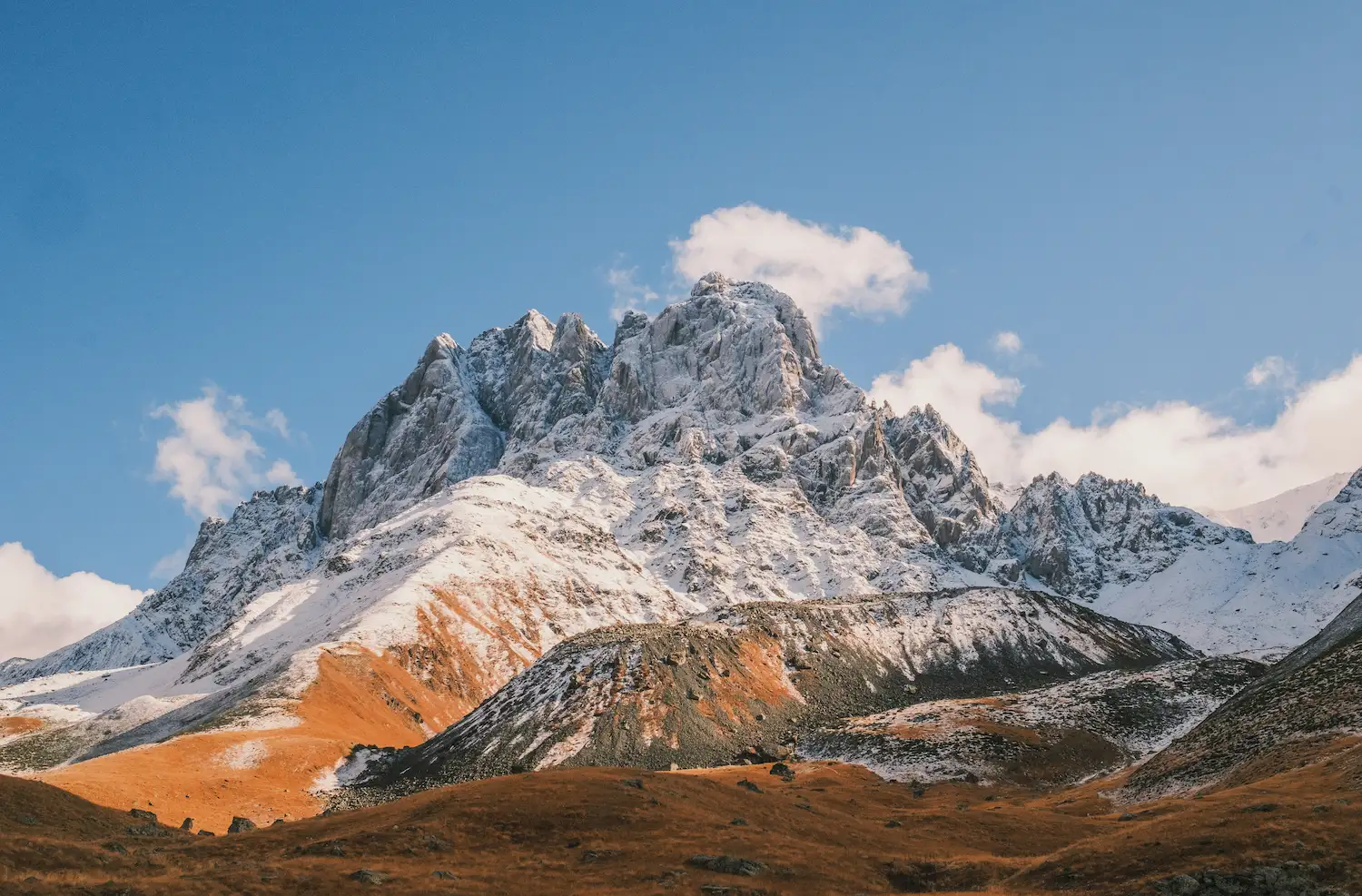
Kazbegi (the town of Stepantsminda and the surrounding region) sits in the heart of the Greater Caucasus, roughly 150 km north of Tbilisi. It's one of the most popular destinations from Tbilisi — and for good reason. The landscape shifts quickly as you go, blending Georgia's history with sweeping panoramic views that change by the hour: you might arrive right among the clouds, or catch bright, clear skies. If you happen to see Mount Kazbek itself, unobstructed, consider that a bit of extra luck.
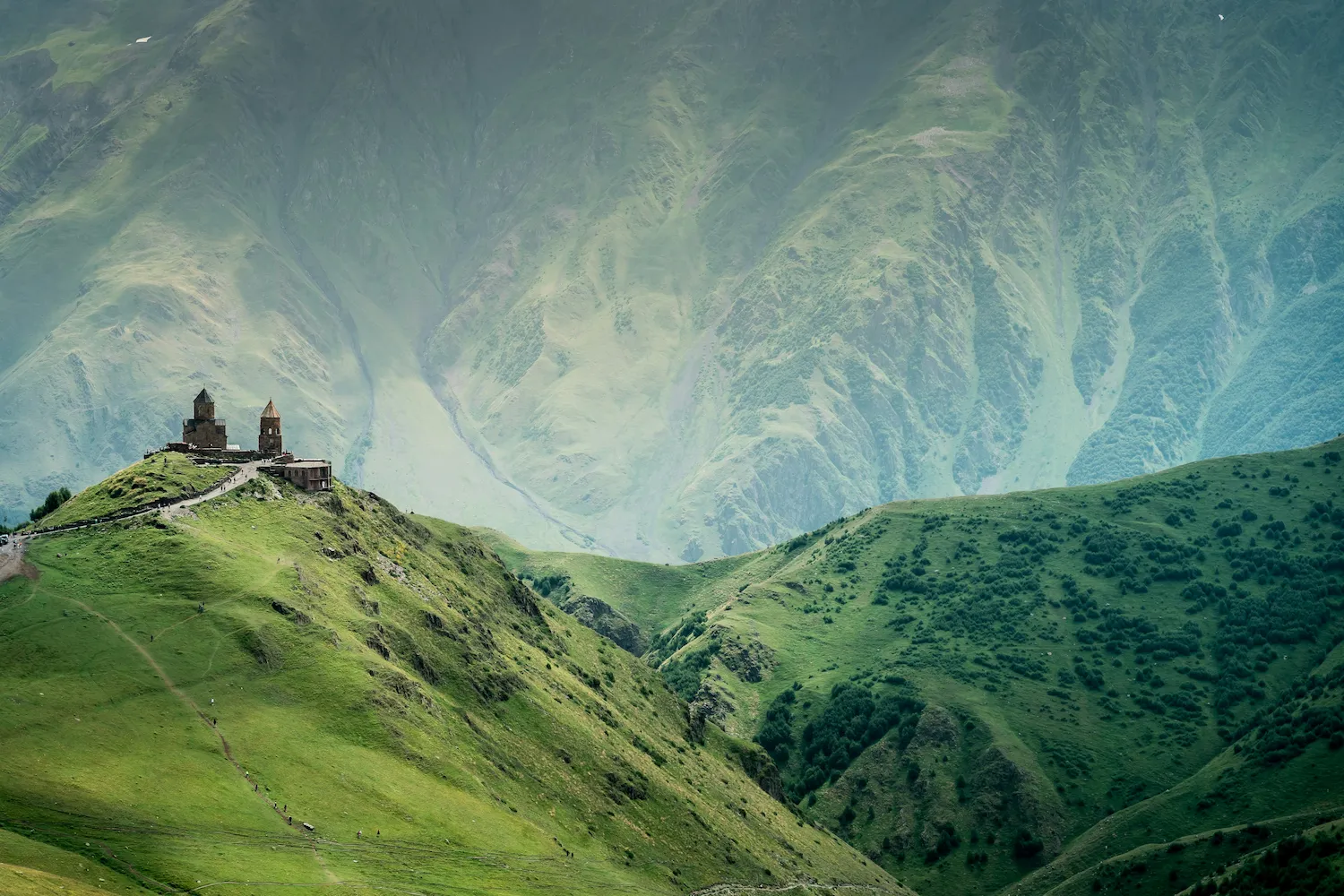
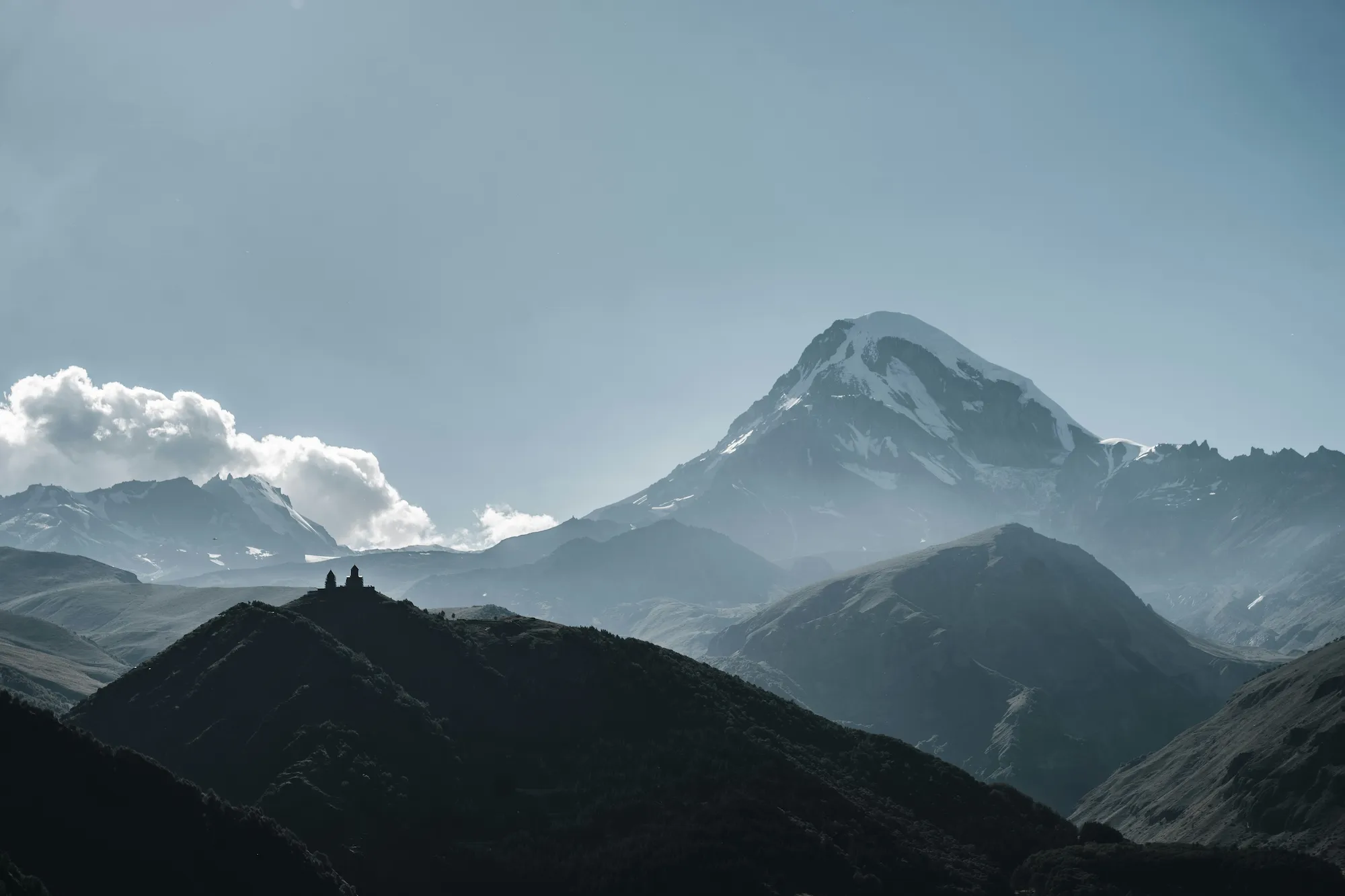
Despite many interesting points along the way, the highlight for most visitors remains Gergeti Trinity Church, a 14th-century stone church perched on a hill above Stepantsminda at around 2,170 m, with Mount Kazbek (5,054 m) often visible behind it. It is one of the most photographed sights in Georgia and a symbol of the country's mountain scenery.
Road conditions
The Georgian Military Highway is paved and used year-round, but it remains a mountain road with sharp bends, steep sections, and occasional heavy traffic in peak season. After winter, parts of the highway may still be under repair, so expect occasional rough patches and temporary one-lane traffic controlled by a flagger. Conditions can also change quickly with weather — always check the forecast before heading out, especially outside summer months.
Transport options
Private car or guided tour
For the most flexible option, choose a private car with a driver, or a small-group private tour from Tbilisi. You control the departure time, stops, and pace — useful on a road with this many photo opportunities and such changeable weather. A typical day trip takes 11–12 hours door to door, including driving time and a stop at Gergeti, and you should also allow for some traffic near Tbilisi at the start and end of the day. If you'd rather not drive mountain roads yourself, a private tour also removes the stress of navigation, parking, and timing. Many visitors also appreciate having a local guide along the way, able to explain the history of Ananuri, Gudauri, and the wider region.
Rental car (self-drive)
Self-driving is a good option for confident drivers who want full independence and don't mind navigating a mountain road themselves. Allow a full day for the round trip, and check the weather forecast before you set out — conditions on this route can shift quickly. Avoid driving after dark or during active snowfall unless you have real mountain-driving experience and appropriate equipment (winter tires, chains).
Marshrutka (shared minibus)
Budget travellers often take a marshrutka from Trans Didube bus station (next to Didube metro station) in Tbilisi to Stepantsminda. Departures run roughly every hour from 9:00 AM to 7:00 PM, with the journey taking 3–3.5 hours and costing around 15 GEL. It's a good option for cheap travel, though it doesn't allow for stops at Ananuri or Gudauri along the way.
The Georgian Military Highway
The route from Tbilisi to Kazbegi follows the Georgian Military Highway — a historic road that has linked Georgia with the North Caucasus for centuries. Today it is one of the country's great scenic drives, climbing through the Aragvi valley and over the high Jvari Pass, with views of gorges, rivers, and snow-capped peaks along the way.
Travelers with extra time can continue past Stepantsminda toward the Russian border, where the highway enters the dramatic Dariali Gorge — a narrow, steep-walled canyon carved by the Terek River, long known in classical geography as one of the "Gates of the Caucasus." The gorge is home to the Dariali Monastery complex and, a short walk off the road, the Gveleti Waterfalls. It's not part of the standard Tbilisi–Kazbegi day trip, but it's an easy and worthwhile half-day add-on if you're staying overnight in Kazbegi.
Stops along the route
Zhinvali Reservoir
About an hour north of Tbilisi, the road opens onto the turquoise Zhinvali Reservoir. There are viewpoints where you can stop for photos of the water and surrounding mountains — a good first taste of the landscape ahead.
Ananuri Fortress
Ananuri is a medieval fortress complex on the Aragvi River, with sweeping views over the turquoise Zhinvali Reservoir. You can explore the walls, towers, and the 17th-century Church of the Assumption, which still holds some of its original frescoes. Allow 45–60 minutes if you want to walk the site properly. It is one of the most worthwhile stops on the entire drive — a classic view of Ananuri Fortress rising above the reservoir on the Georgian Military Highway.
Gudauri and the Friendship Monument
Further north, Gudauri is Georgia's main ski resort, with wide viewpoints over the Caucasus range. The colourful Russia–Georgia Friendship Monument sits on a cliff edge with panoramic views — a popular photo stop and one of the most photographed mosaics on the Military Highway. In winter this area is busy with skiers; in summer it is still worth a short break for the scenery.
Jvari Pass
The road crosses the Jvari Pass at around 2,395 m — one of the highest points on the route. Even in summer, temperatures here can be noticeably cooler than in Tbilisi. Cloud and mist roll in quickly, so views are never guaranteed, but on a clear day the scale of the mountains is unforgettable.
Stepantsminda (Kazbegi)
Stepantsminda is the main town in the region (still widely called Kazbegi after the former name). It has guesthouses, cafés, and a small centre where most day-trippers pause for lunch before heading up to Gergeti.
Gergeti Trinity Church
Gergeti Trinity Church (Sameba) stands on a grassy hill above Stepantsminda. The church itself is small and ancient; the setting is what makes it extraordinary — open sky, steep slopes, and often Mount Kazbek filling the background.
How to reach the church
- Hiking: A steep trail from Stepantsminda takes roughly 1.5–2 hours each way for fit walkers. Wear proper shoes and bring water.
- 4×4 taxi: Local drivers offer rides up a rough track to near the church. Prices vary; agree before you go. This saves time and energy on a day trip.
- Organised tour: Many private tours include transport to Gergeti as part of the day, with time built in for photos and exploring.
- Sedan: One thing worth knowing — in the summer season, an average car can often make it up without issue. Reports vary by source and season, but on a visit in early June, the road to Gergeti was entirely manageable for a standard sedan. That said, conditions can change (rain, road work, or a rockier patch further up), so it's worth asking locally before you set off, and having a backup plan (taxi or hike) in mind either way.
Dress modestly to enter the church — shoulders covered, and women may need to cover their heads and wear a skirt over trousers. Wraps and skirts are usually available to borrow at the entrance if needed. The summit is exposed, so bring a light jacket even on a warm day in Tbilisi.
Seeing Mount Kazbek fully clear is partly luck: clouds often gather around the peak by afternoon. Morning visits sometimes offer the best chance of a clear view.
Best time to visit
Late spring through early autumn (May–October) is the most reliable window for a day trip, when Gergeti is accessible without winter equipment and days are long enough to enjoy the drive properly. For a full season-by-season breakdown — including harvest timing in Kakheti and high-altitude trekking windows — see our Best Time to Visit Georgia guide.
- May–June: Green valleys, snow still visible on high peaks, fewer crowds than midsummer — though early May can still have some snowmelt or mud on the higher stretches.
- July–August: Peak season — busiest roads and viewpoints, generally stable weather in the valleys, though afternoon thunderstorms at altitude are common.
- September–October: Clear light, cooler air, and autumn colour in the valleys.
- Winter: Possible with care — dramatic snow scenery, but shorter days, cold, and occasional road restrictions between Gudauri and Kazbegi due to avalanche risk. Ski traffic around Gudauri increases congestion.
What to pack
- Comfortable walking shoes with good grip (for Gergeti and Ananuri)
- Layers — temperatures at Gergeti can be 10–15°C cooler than Tbilisi
- Sunglasses, sun cream, and a hat (high altitude sun is strong)
- Light rain jacket or umbrella — mountain weather changes fast
- Water and snacks for the road, especially if travelling independently
- Cash for small purchases in Stepantsminda (cards are not accepted everywhere)
Day trip or overnight stay
A day trip from Tbilisi is enough to see the Military Highway highlights and Gergeti if you start early (around 8:00–9:00) and accept a long day. You will spend much of the time in the car, but the scenery rewards the journey.
An overnight stay in Stepantsminda makes sense if you want sunrise at Gergeti, a longer hike (such as towards Gergeti Glacier), or a slower pace without rushing back to Tbilisi before dark. Guesthouses range from simple to comfortable; book ahead in peak season. For waterfalls, viewpoints and day hikes once you're there — Juta, Truso, Gveleti and more — see our guide to what to do in Kazbegi.
Practical tips
- Start early to maximise daylight and beat the busiest traffic on the highway.
- Build in buffer time for stops — Ananuri and Gudauri alone can easily take two hours combined.
- Check the weather the evening before; fog at Gergeti does not mean the whole day is lost, but it helps to adjust expectations.
- Altitude: Gergeti is above 2,000 m. Take it slowly if you are sensitive to elevation.
- Respect local customs at churches and in villages — quiet behaviour and modest dress are appreciated.
- Mobile signal can be patchy in mountainous stretches of the route; download offline maps if self-driving.
However you travel, Kazbegi remains one of the most memorable outings from Tbilisi — a day where Georgia's mountains feel close enough to touch.